Is Gurinder Singh really Shintu Kumar? A simple DNA test should answer this without question.
From Rediff:

Woman from Bihar claims lost London Sikh boy is her son
PTI March 26, 2008 03:36 IST
A family from Bihar claims that a nine-year-old Sikh boy found abandoned at a London bus stop last week, is their son and was kidnapped three years ago. The Metropolitan Police is investigating the matter and has not ruled out that it could be a case of child trafficking, given that the boy apparently lived with a European for three years. Gurrinder Singh, who speaks only Punjabi, was found in Harrington Road, Southall area last week, the BBC said. It said one Bindiya Devi of Aurangabad town in Bihar claimed Gurrinder's name is Shintu Kumar and he was abducted on March 3, 2005. The family claimed to have seen the boy's photo flashed on a TV channel and instantly recognised him. Bihar legislator Bhim Singh endorsed the family's claim and said Shintu was his nephew, while the Aurangabad police is reportedly investigating the matter. Gurrinder told city police that a European in his 30s who he called 'uncle' left him at the bus stop after they had lived together for three years. The boy apparently told them that his parents were dead and the police had begun a probe into whether he was a victim of child trafficking. Bhim Singh told BBC News that he had raised the issue in Bihar Legislative Council. "I discussed it at length with the chief minister," he said. Aurangabad Superintendent of Police Ganesh Kumar said four people were on trial in connection with the abduction but the boy was never found.
| |
--
WHY TRY TO FIT IN?
YOU WERE BORN TO STAND OUT!
Mostly, this is crossposted from sometimes - 2, but I wanted to add this little note. I thought this post would both amuse and inform you. For example, did you know our men are scary because they look fierce? I always thought they just looked handsome and masculine! And am I really 'a little bit scary'? Ah, well, read on!  Yesterday, great good news! Today, that is tempered with the continuing reality of survival. Aecond conversation with Ciru. Here's the first.Last night, we spoke to our sister, Ciru, near Nairobi. 'Oh, Mai, it is so  wonderful. The killing has stopped. People don't really want to hate each other.' She was really happy, overjoyed, but I heard something in her voice. 'What's wrong, dear? I can hear that something still is wrong with you. How is your leg?' She had had a blood clot in one leg and it had been healed, but she still had pain and weakness there. With enthusiasm, but a little forced-sounding. 'The leg is fine. I think it's completely healed!' A sudden brainstorm! Mai is hit with lightening! 'Ciru, do you have enough food?' A moment of silence. Then. 'No, we don't have food. There isn't much to begin with and it's so expensive. We're hungry.' I felt a sinking feeling in my stomach. We will, of course, wire money to her, but why hasn't our son, the aeronautical engineer, seen to her needs? They have money. Surely the situation isn't so bad that he can't help his aunt. We need to call him to get her food immediately! 'Oh, Ciru, we'll get you money for food? If you have money, food is there to be bought?' 'Not very much and it's so expensive, what little there is.' 'Can your church help?' 'They're filled up with displaced people. Wives and husbands and children all separated and looking for each other. I don't know if we'll ever get it all straightened out. But at least the killing has stopped.' 'You know, the stores were burnt and the crops were stolen or even burnt and the rain  s haven't come. We're still waiting for the rains.' 'So drought on top of everything else?' 'Uh-huh.' 'Darling, find the nearest gurdwara (Sikh temple). We have a tradition called langar. Anyone who shows up can eat. As long as there's any food at all, you will be able to eat there.' 'I'm a Christian, not a Sikh. You know that! I don't want to change. And Sikhs are scary.' 'Doesn't matter that you're a Christian. No one will care about that. And you won't be preached to. No one will try to convert you, I promise. And I'm a Sikh. Am I scary?' A little giggle. 'Only a little bit.' (I'm a little bit scary? I'll have to explore that sometime. But not now.) 'Are you sure they won't try to convert me?' 'Yes. One hundred percent positive sure. Just you don't try to convert anybody, OK?' 'OK. The men are scary. They're so big and hairy and fierce-looking. Are they really safe? Are you sure?' I admit to being a bit annoyed by this. 'Of course they are. I guarantee. If not they'd have to answer to me.' She bursts out laughing. 'I'm sure no one would want to have to answer to you! I bet even the men are scared of you.' (What is this about me being scary? Now I know we have to straighten this out!) 'OK, I know where one is. I'll go there. Oh, how do I need to dress?'  "Just dress normally, but be sure you can sit on the floor. You might put a scarf on your head.' We continued talking for some time. It was good to hear her sounding like herself again, joking a bit about how she needs to sprout wings and fly over here to be with us. She still wants us to go there to see her beautiful country, too. We do love our homes, don't we? I know I have been feeling a strong urge to visit Punjab (O. K.) recently, but that's the subject for another post. If you'd like to contribute to the people of Kenya, I suggest you donate to the Kenyan Red Cross. You can do it here, right on the Net, at donations to Kenya Red Cross. So many times, I have heard, 'But I'm just one person, what can I do?' Well, here's a chance. These are real people, not abstractions from a news article or clip, and they need your help.  Pictures: I have purposely left out the pictures of the starving African children. We have all seen too many of those, haven't we? After a time, we just quit looking. So I have posted pictures of a langar hall in use, a plate of food you might get at a langar (it looks so good!) , some organic producee grown in Kenya, the bust of a beautiful African woman, and a photograph of a beautiful modern Kenyan woman, Essy Wambui, a graphic artist. Follow the link to learn more about her.
 Teach your children well,
Their parents' hell did slowly go by,
And feed them on your dreams
The one they picked, the one you'll know by.
Don't you ever ask them why, if they told you, you would cry,
So just look at them and sigh and know they love you.Last Wednesday, as I do every day, I walked out to the mailbox to pick up our snail mail. As is often the case, some young teenagers across the street started making fun of me. I do look a little strange, walking slightly off balance and my semi-paralysed left hand has a tendency to ball up into a fist and that arm hangs a bit funny, not quite natural looking, I suppose. I ignore these rude kids, as usual, but I'm very much aware of them. That day, though, there were a couple I hadn't seen before, a girl with very long, black hair and a boy with a patka. As I turned from the mailbox to walk back into the house, the girl loudly slapped the patkaed boy and ran across the street to me.  'Ma'am, I'm sorry. They shouldn't be rude like that. It's mean.' Then she very bravely gently took my left hand and held it. Cooties, you know. 'Thank you,' I said, 'That's very nice of you. I appreciate your thoughtfulness. But you know, Guru Ji says we should use physical force, only when there's no alternative. You really shouldn't have hit your...brother?' 'Yeah, he's my brother, Steve [Steve? I thought.] Guru Ji?' She gave me that very curious look, grabbed my right hand and my kara fell out of my long sleeve to my wrist. She gasped and then broke out in a huge smile. 'She's one of us!' she shouted across the street and ran back to her brother. 'Sorry I hit you, but you shouldn't be so mean.' All three came across the street, obviously curious about me. They were full of questions. 'Are you a goreh Sikh? What happened to you, your hand doesn't work too good. Do you hate us for being mean?' 'Not exactly. I had a stroke. No, but you should stop the rudeness.' I invited them in and offered them some hot spiced milk and cookies (biscuits to you Commonwealth types). How cliche. I told them about my family with the Punjabi Sikh father and the French Canadian mother. They were fascinated by my eccentric family and they wondered if I had any kids. Without really thinking about the situation, I answered, 'Yes, a son and two daughters, but they're dead. They got killed.' Instant sympathy as only the very young are capable of followed immediately by curiosity. 'How did they die. Can we ask? Was it a car wreck or something?' 'Or something, I guess. We were visiting in Delhi during the anti-Sikh violence in 1984 and they got killed.' 'I heard something about that, but I don't really know what happened. About a thousand Sikhs were murdered, right? We know it happened, but no one who was there will talk about it. Tell us.' Suddenly we were in much too deep. I really didn't want to give these innocent - if rude - young kids their first first-person account of this ugliness. There was a naive sweetness to them that I knew my story would destroy. Usually, I feel the need to tell our story, but this time, I was very reluctant. 'How devout are your parents? How much does being Sikh mean to them?' The boy answered. 'They're both amritdhari. See they don't let me cut my hair.' 'Would you, if they let you?' 'Oh, yeah, all this hair is so dumb. And they're always laughing at me at school.' That decided me. 'My son, Sandeep, was about your age - you're around 13? - when all this happened. ' The boy coughed. 'I like to be called Steve, but my name's really Sandeep. Like your son.' 'Well, he'd probably still be alive today if he'd cut his hair.' So I told them the whole story. And I showed them what I will not show you, my readers, our pictures. I showed them the formal family portrait we had done before we left for India in April, 1984. They did the obligatory oohs and aahs over how beautiful I was and how handsome Mani and Sandeep were. We really were a good-looking family, if I may say so. Then I showed them the pictures we had taken with our hairs down and open - proof it was unshorn - before we were attacked in Delhi and then the pictures of us in full bana, all of us, even me, with turbans, ready for whatever would happen. They giggled uneasily over that picture. 'You look like people out of an old Sikh history book, like shaheeds fighting Mughuls or something.' Then, very softly from one of the boys, 'I guess you were kind of like them.' Then, 'We need to see the other pictures, too.' I pretended not to understand, but they persisted. 'The ones your rescuers took. You said you have them.' Those pictures are graphic and bloody, not things to show these young people. On the other hand, scenes as graphic and bloody are shown daily on CNN and even network news. 'Are you sure you want to see them? They're pretty terrible.' That, of course, although unintended by me,. goaded them on and they insisted they simply had to see them. I have both printed copies and a CD, but I didn't feel like looking at the large pictures on the TV, so I got the prints. I myself rarely look at them; they really are that bad. It so happened that the top picture was of Sandeep lying on his back, his head at that askew angle. I had, of course, washed all the faces, so at least there wasn't a lot of blood there, although, some had seeped out of his nose after I had washed him. All of them looked at the photo, then at the portrait still on the TV screen, back and forth. None of them had dry eyes. 'Shaheed,' whispered Steve/Sandeep boy. However proud we are of them, I doubt any mother wants that particular word to apply to her child. We give them willingly, when necessary, of course, but... 'I'll never, never cut my hair,' from Sandeep/Steve , loudly. 'Never!' He may change his mind later, but for a moment, at least, he experienced the pride and determination of a Sikh. We went through the rest; the pictures of me lying across Mani's body clearly upset them. They did comment on how peaceful they all looked. I always have that reaction to these pictures, as well. Their reaction to the picture of the [person] I had killed surprised me, although I guess it shouldn't have. His face had not been washed; it was covered with blood. His eyes and mouth were open and his throat a gaping mass of dried blood. In contrast to our shaheeds, there was nothing peaceful looking about him. Those unseeing eyes and silent mouth still clearly showed the terror he had experienced at the moment of death. And my new, young friends? They cheered. And laughed. And I didn't stop them. I suppose I should have given them a lecture about how it is a painful thing to kill, even when it's necessary and how death is a tragedy and, you know, all that. But I didn't. I always feel a particular sense of satisfaction when looking at [him] lying there, terrified, helpless, dead. When they left, I told them I'd really like to meet their parents. Two days later, I did. A knock on the door and there stood a medium height, rather weathered-looking turbaned gentleman and a diminutive lady in an orange salwar kameez suit, along with the two young teenagers. We fatehed each other quite formally and I invited them in, the woman trying hard not to giggle. I wondered why. The man was very serious, however, and when we started talking, I discovered that his brother had been killed in Delhi. They had never told their kids about him or what had happened there. I got in the impression that he was glad that had gotten the story from someone else. Nervously, 'My two reluctantly Sikh children are suddenly talking about taking Amrit. My son, Steve, has become Sandeep and instead of lobbying to hack off his kesh, he wants to tie a turban.. We would like to see these extraordinary pictures if we could, please.' The wife, able to contain herself no longer, burst out laughing. I had wondered if perhaps she couldn't speak English, but she spoke up, with a perfect Toronto accent, 'I'm sorry, but I thought with the way the kids talked that you'd be at least two metres tall and breathe fire. You look more like one of the gurdwara aunties than like a mighty warrior.' I laughed. 'You might be surprised at some of your gurdwara aunties.' And she probably would, at that.
I showed them the pictures, first the 'nice' ones, then the gruesome ones. They had the same reaction as their children. 'So sad, but they look so peaceful.'
As they left, they were a little apologetic. 'We should have talked to our children about these things, ourselves.' I could not disagree. Unfortunately, they are just here for a week visiting family and will soon return to Toronto. '...And know they love you. Teach Your Children -Crosby, Stills, Nash and Young, 1970 is a great song and it deserves to be read by all of you, so here are the lyrics: You who are on the road
Must have a code that you can live by
And so become yourself
Because the past is just a good bye.
Teach your children well,
Their parents' hell did slowly go by,
And feed them on your dreams
The one they picked, the one you'll know by.
Don't you ever ask them why, if they told you, you would cry,
So just look at them and sigh and know they love you.
And you, of tender years,
Can't know the fears that your elders grew by,
And so please help them with your youth,
They seek the truth before they can die.
Teach your parents well,
Their children's hell will slowly go by,
And feed them on your dreams
The one they picked, the one you'll know by.
Don't you ever ask them why, if they told you, you would cry,
So just look at them and sigh and know they love you.
The picture of the young man is from a SALDEF mailing. I chose it because the young man's new mustache reminds me so much of Sandeep. He was so proud of his - as well he might be. Few young men of 13 have such a nice one. The bird watching picture is for my readers who love birds. And children. And courage?
WHY TRY TO FIT IN?
YOU WERE BORN TO STAND OUT!
 This is Suni. I haven't written here for a long time, but now I'm married and pregnant and happy and I'm ready to tell you about my first husband and our son. I come from a wealthy khatri Sikh family. I mention that because it is important to my story. While I was at university studying psychology in Delhi, Papa Ji decided I needed a husband. Without consulting me, he looked and looked until he found me the perfect man. Then he told me. I agreed to meet him, but you'll find out later why I knew it would be a useless meeting. The man was very nice. He was about 30, fair and handsome, educated, sophisticated, rich and seemed like a good man. He was a turbaned Gursikh, of course. Under normal circumstances I would have wanted to get to know him and maybe I would have married him. He could have provided me with a very prosperous life. My life would have been happy and uncomplicated. Mohan was the problem. I had met him at university and he was just the opposite. He was my age, tall and handsome, but dark and he came from a very poor family. He was Sikh, but before he knew me he had never grown his kesh and took off his kara at night and when he showered. In short, he was what is called a 'dalit Sikh' and was at university only because of reservation. Although he was intelligent, there was no other way he could have gotten an education. When I met him, he was a bit scruffy and countrified, but when he spoke up, he always had something insightful and interesting to say. His background was completely different from anyone I had ever known because I had grown up in a cocoon of wealthy Sikh India. Of course, he fascinated me.
 I made it a point to get to know him. I have never been the shy, demure Indian lady of the stereotype. If I really want something, I go after it. The long and the short of it is that I fell in love with him. I knew my family would never let us get married, but I was young and reckless. We secretly got married. This was before I was introduced to Papa Ji's gentleman. I didn't know what to do, but I had to do something soon because Balbir had already been conceived. Terrified, I took a picture of Mohan and visited my parents. I told them all about him and about our marriage. It was worse than I had imagined. My father screamed and hollered and yelled. And then he struck me and knocked me to the floor. I didn't expect that. I had never known him to be violent. Then he turned and stomped away, leaving me with my mother. She picked me up and put her arms around me and cried. That was when I told her that I was going to have a baby. Then she really cried. When my father returned, he was more calm, but no less angry. He apologised for hitting me and handed me a large cheque. 'I won't have my daughter living in poverty, but I can't condone this marriage. Now go and don't come back. You have joined this nobody's family. You're no longer my daughter.' I left, but nothing is ever that simple. I knew if I destroyed that cheque, there could never be any hope he'd ever soften, but if I brought it home, it would be a terrible blow to Mohan's pride as a man. I deposited it in the bank and didn't tell anyone. The break with my family was painful, but also a blessing. Now we could begin our real married life. We moved into a small flat, not very pleasant, but it was our first home and I loved it. The estrangement from my family wasn't total, either. My mother secretly stayed in touch with me, and my younger sister and my brothers sometimes visited. It wasn't comfortable, though. Mohan wasn't comfortable with them and they were, I'm sad to say, a little snobbish toward him. By this time, he had a respectable jura and was tying a dastaar, so he looked like a proper Sikh. I think that helped a little. Now let me tell a little about him. He was from a village north of Delhi and came from a very large family. He had 13 siblings. They were poor but not destitute by Indian standards, they managed to eat and stay healthy. I think they must be from very strong stock. They were the opposite of my family in every way. They lacked money, but there was so much love there. They laughed and worked hard and I think in spite of their poverty were much happier than we were in my family. At first they were a little bit afraid of me and I admit I was apprehensive about them, but we got to know and love each other quickly. His mother first looked at me and said something like "I don't know how to be a mother-in-law to such a grand lady!" I laughed and told her to treat me just like any daughter-in-law who married her son without a dowry. We became friends at once. We lived in Delhi and built a little vegetable market business and made enough money to send some to them. We also made some investments that turned out very well. Mohan had a talent for investing. Mohan was very even tempered most of the time. He was calm and able to take life as it came. He considered his background uncouth though and was ashamed of his family. This hurt me because they are good people and deserved better from him. He was big and strong physically, but unlike my Canadian cousins, he was no warrior. He was a great negotiator. He acquired the reputation of someone who could get people to settle disputes and he became a sort of neighbourhood small claims judge, sort of like The People's Court. He was kind and loving to me, an almost perfect husband. He felt guilty about my estrangement from my family, but I did my best to convince him that we both knew their reaction would be negative and we just needed to accept it and move on. When he was blessed with Amrit, he changed. It was as if all the lack of confidence and that lurking inferiority complex just vanished literally overnight. Balbir was a different story. From the beginning, he was always in trouble. He was a finicky, colicky baby who grew into a cranky toddler. Please don't misunderstand me. He was our son and we both loved  him so very much, but he was a problem. He lied. He stole. He hit the other children. We tried to teach him our values, but he was always in trouble. When he was of school age, we sent him to stay with Mohan's family in the country. We were hoping that he would get into less trouble away from the temptations of the city. We had been sending money regularly and the village school was good enough for the beginning of his education. It was a good move. His aunts and uncles simply wouldn't tolerate his misbehaviour the way we did. He had to do his chores and they were greatly increased with each incident of stealing or lying. He was intelligent enough to learn really fast that good behaviour made life more pleasant and bad behaviour made life quite unenjoyable. This was really hard for me. I missed him and it seemed too much like training a dog. When he finished primary school, we brought him back to Delhi. At first, he was well-behaved, but I'm afraid I was too indulgent and before long, he was getting in trouble again. By this time, we had bought a nice house in a good area of Delhi and were quite respectable people. Mohan didn't want his son to throw jellybeans into the machinery of our lives. Luckily he took over the role of disciplinarian, but Balbir remained inwardly defiant. It was in June, 1984, that Mani and Mai and Sandeep came to visit us. They had been in the hands of the Punjab police and had been let go when they realised they were Canadians, and then they had a hair raising escape from Punjab. When they showed up here, they were tired and dirty and Mai was pregnant like me but not so far along. The men were psychologically in bad shape, but Mai was in chardi kala. She has already explained about that. She was physically injured, but she didn't seem to care. I had known her from childhood when her family and Mani's would visit India in the summer. She always amazed me because she would do anything that came into her head that seemed interesting to her, no matter how outrageous it was. I'll leave it to her to tell about the time she flew off the roof. I think her biggest stunt was when she ran away and came home on the shoulders of a Nihung. That was Mai. She always had a sort of style. You have heard that some people mix like oil and water? Well, Mohan and Mai mixed like sodium and water. BOOM!! He dislikes loud, brash, pushy, over confident, vulgar, uncouth women who think they're men. That was one of his more complimentary descriptions of her. Her description of him, under her breath was 'pussy wuss.' When he learned that her father was jatt, that did it. The only people hew hated more than brahmins, even our nice neighbours were jatts. She became 'that half caste jatt brahmin bitch who pretends she's a Sikh.' to him. Never mind that those terms are all contradictory, that was just his way of being insulting. He did admit she was beautiful, though. On the other hand, she sweetly shared with me that he was too damned weak to be a sant, much less a sipahi, but he was very handsome. I wonder if they could have gotten along if they would have both dropped their prejudices?
Sandeep had a wonderful effect on Balbir. He had a good effect on everyone, though. A few people are like that and Sandeep was one of them. Mohan was even willing to overlook that Mai was his mother and he loved Sandeep, too. Sandeep was a Gursikh like his parents and from the first had decided that he and Balbir had to arrange to take Amrit together. Amrit? Balbir? Our delinquent son started getting up at amrit vela to pray, can you imagine? He had always kept his kesh, but wore only a patka and really didn't take good care of his hair. That changed at once. Sandeep stuck out his chest and said, "What's wrong with you? I've been tying a dastaar since I was seven." So Balbir started tying a turban, and Sandeep insisted it be tied well. At this time also, Balbir wanted to be called Billy. Sandeep would have nothing to do with that. "They tried to call me Sandy. Sandy! What kind of a name is that for a Sikh? And Billy is even worse. Bilbar is much better. Isn't that the name the Guru Ji told the panj piyare to give you?" After a time, Sandeep relented a bit and they began calling each other Bilbo Baggins and Samwise Gamgee. Sandeep also began teaching Balbir gatka. How I wish he had taught Mohan as well. That leaves Mani. All he could see of Mohan was that he hated Mai. Mani was a very rational, logical person, except where Mai was concerned. She was perfect and that was that, so those two were metaphorically at each other's throat whenever they were together. Poor Mai. She wanted peace, I think. I think she also enjoyed the way he stood up for her though. As they say, he had her back. We all went to stay for awhile with his family in the village. We were two pregnant ladies and the air of Delhi was thick and grey black and barely breathable. If only we had stayed there. We decided to have a big family reunion in Delhi. We invited their families from Punjab and Kashmir and Canada and Mohan's and mine. My parents refused to come, but my sister and brothers were there. In all we had 39 people, quite a big crowd. That is how we were when SHE was executed. When it became clear that Sikhs were being murdered, we quickly divided into two groups, cut the hair and run and hide, and Sikhs. When the dust settled, we Sikhs were 11, including three unborn children. I cannot express how proud I was of my husband and son at that time. They both stayed. I think even Mai and Mani gained some respect for Mohan. Mohan, however, wasn't gracious. He went to the room where they were staying, brought her purse and passport and return ticket. He handed her those objects, then he tossed the car keys at her and told her to leave, this is a battle for Sikhs. I thought Mani would kill him, but Mai held him back. I have never seen anyone as cold as she was  then. Her voice would have frozen hell. "It doesn't matter whether I'm a Sikh or not. This is my family and I stand with them. " She sat the purse and passport and ticket on the table, walked over to him and dropped the car keys at his feet. They glared at each other for a moment. I had no idea what would happen, but our sons stepped forward and separated them. They said that there were people who wanted to kill us, we should save our personal differences for later. Mani muttered, "This isn't over." It was over though. They never had the chance to have it out with each other. Those are my first husband and my son. We had a good life together and loved each other and made a nice family. In the end, when it counted, Mohan became a sipahi and they both died as shaheeds. That cheque my father gave sat in the bank all those years building interest. I still had our investments and Mai's family in Canada have enough money, so I never needed it. It has been donated where I believe it has done some good.
 From Nairobi  To Seattle We have met the invaders...and they are very nice people.
It was like this.
Those who know me well know I rarely go out in public because of my health problems. But this was unavoidable. So I said a prayer and hoped for the best.
I was very nervous about their coming. What would they think of me? I am, after all, the outsider in the family. What if I said the wrong thing. What if I broke some obscure Kikuyu taboo? And what if they didn't like me? I had the good sense to start japping naam - that is not a racial slur, it is the meaningful repetition of God's name - and a bolt of lightening hit me! Me, me, me...It was all me! These people were just getting off 17 hours on airplanes. They were leaving everything they had known all their lives. They had left the tropics and were arriving in the middle of winter. Why, they even had to get used to people driving on the wrong side of the street. And I was a totally unknown quantity to them. You'd think at my age I would have matured to the point that thinking of others would come nasturally. No wonder EGO is one of the five big thieves.
My nerves immediately calmed down and I started thinking about how to make them feel welcome. All went well after that.
To begin, the flight from Amsterdam was half an hour EARLY. Who ever heard of an international flight being early? I had the foresight to check that out on the KLM Website. If I weren't a Sikh and were even slightly superstitious, I would have thought that a good omen.
Simon dropped me off at the arrival gate and went to park the car. I asked the guy at the KLM counter where I should wait and he gave me instructions, saying the flight had already arrived but it would take half an hour up to two hours for our passengers to clear customs. So I waited. And waited. And waited. How long could it take to park a car? And where was Simon's other son. And his ex, who also lives in this area?
People started coming up the escalator and still I was alone.
I started toying with the idea that I might be the only one there to greet them. I would be able to recognise them with no trouble at all. A family group of eight Kikuyus on a flight from Amsterdam would be pretty conspicuous. On the other hand, they would have no way to know who I was.
So what should I do? Go up to them waving my hands, calling, 'Daniel? Wayne? Jane? Mary?' And them thinking , 'Who is this crazy lady who seems to know all our names?'
Of course, like most projections that didn't happen..Simon showed up. Someone had directed him to the baggage carousel instead of the area they'd be arriving at from customs. So we waited a bit. Eventually his ex and her sister showed up, but the family still hadn't come up the escalator. We were getting concerned. Had we somehow missed them? Were they having problems with the government officials? Surely, they weren't the very last in line!
Surely they were! They said everyone else was in such a hurry pushing and shoving and they decided just to be civilised and hold back and wait. (They'll learn quickly enough that such courtesy is rare - and rarely appreciated - in America.)
They finally came and there were hugs and kisses - I'm Indian enough to feel a little uncomfortable with all this kissing in public, I admit, but I got through it - and lots of pictures. I can't wait to see them. No one will have trouble picking me out; I'm the one with the long - relatively speaking - hair. Oh, yeah, and the fair skin. Everybody was really nice and they felt like family to me. The only exception was the sole girl child in the group, Young Njeri. I guess she's about 9 or 10, and she kept giving me this 'and who the hell do you think you are!' look. She has enormous eyes, incredibly expressive. Oh, well, I'm sure she was tired and I hope she'll warm up to me in time.
Eventually, Simon's youngest son showed up and all were packed into cars and went off. Simon went to get our tiny car, leaving me again alone in the terminal. I looked up and saw a 'visible' Sikh happening by. Very visible. Punjabi pajama, kirpan at the side, beautifully tied turban (I notice such things). Rather handsome, too. (Yes, I notice that, too. I'm in my midfifties and married, but I haven't yet gone blind.) As he approached, I said, 'Sat sri akaal.'
He stopped and returned my greeting, looking at me curiously for a moment, then spotting my kara, said, 'You're Sikh?' in that unbelieving tone I've heard most of my life.
'Yeah.'
'Waheguru ji ka khalsa! Waheguru ji ki fateh!'
Testing me, I guess. This time I returned his greeting.
He grinned and extended his hand, 'Harinder.'
I grinned and extended my hand, 'Harinder.' I rarely use that name, but it was too good to pass up. 'But they usually call me Mai.'
He stopped and stared. And started singing, ' "There once was a Khalsa maid," that Mai?'
For my own reasons, I do not like people identifying me in the flesh with the author of this blog, but I didn't want to lie. I don't think it would have worked anyway.
'Yeah.' I was embarrassed.
'Well, why is your hair down and open and exposed like that. And I've never seen a kanga stuck in the hair quite like that.'
Who did he think he was, anyway!? 'I can do most things one handed, but I haven't figured that out yet.'
"I have a daughter.' Before I could react, my hair was in a neat bun. I wasn't sure whether to thank him or slap him. Instead I burst out laughing.
'Do you usually go around grabbing strange women's kesh like that?'
'I don't know what got into me. I've never done anything like that before. Shall I apologise?'
I shook my head, no, hardly able to keep from bursting out laughing.
'But you're no stranger to me. I feel like I know you better than I know my own mother or sisters.'
[Is this blog really that revealing?]
I saw Simon drive up outside. I left, wondering what he would say about my hair, wondering what I would say about my hair. But he was so wrapped up in himself and his sons arrival that he didn't even notice.
So that was the meeting. An altogether interesting day. And I made it almost home without any mishaps.
Ciru is my sister-in-law. Seattle, Washington, USA 2 January 2008 1:35 AM Telephone ringing. Near Nairobi, Kenya 2 January 2008 12:35 pm --Hello? -Ciru, is that you? Are you OK --(Wailing) Noooooooooo!!!! It's terrible! You couldn't believe... -But you're alive? Your house is OK? --Mai? Alive? Right now. But they're fighting on every corner. Ohhhhhhh... -Try to calm down. We need to know what's going on.  --Mai, Joseph ran off. It's just me and my girls and the granddaughter. Just us 4. We don't dare go outside. They're killing all the Kikuyus they can find. We saw them tyre a man outside here. He was screaming and they were all laughing. -Debbie (granddaughter) saw that? --No. We hid her away in the bedroom. -What about the rest of the family? Have you heard from Nakuru? --We talked to them by phone. Their houses are all being burnt. -Are all our family alive? Do you know? --Yes. None of us has been killed. But they have no food. They were begging us to send food, but we can't. There's no transport, the roads are all closed and barricaded. Mai, help us! Please! They're killing us everywhere! -What about the police? --Here? Near Nairobi? Mai, help us! -Uh, yeah. --They just stand and watch. They don't care. The army, too. They're everywhere, but they're not doing anything. I guess in the countryside, some Kikuyus are taking refuge in police stations, but here we don't dare even to go out. You can't imagine! -(Under my breath) I think I can. (Aloud) Do you have anything to defend yourselves with? Guns, knives, even iron bars? --(Gasping) We don't have guns and we're women! What do we know about fighting? -(sighing) Are they raping women? --No. Just killing. They just want us dead Did you hear about them bu  rning all those people in the church? In a church! -Yes. --Mai!! Mai!!! You've got to help us. It's going to be like Rwanda!!! -(Under my breath) Or Delhi. (Aloud) Do you still have electricity? Water? --Yes. - Then be sure to store as much water as you can in anything you can find. You can live for a time without food, if need be, but you need to have water. --OK. We can do that. (To her daughters) Mai says we need to store water. (Speaks in Kikuyu) What else? -Gather anything you can use to defend yourself and practice using them. --We're women! -Well, I want you to be live women when this is all over. --(Very quietly) Did you hear how they burnt that church? -Yes, it was terrible. --That's not what I mean. They sealed the exits. They knew how to do it. They knew just what to do. Pelt it with stones so no one can leave. Then seal the exits. Then torch it. A mob couldn't think like that. (Sobbing) This was all planned. The election was just an excuse. They want to be rid of us. They hate us so much. You can't know... -Another time, I'll tell you. But now, Ciru, you need to keep a cool head. Have you been praying? --Oh, so much. -You need to sing songs, too. Happy songs, up-tempo songs. Fighting songs, if you know any. You have to keep their spirits high. --I don't think I can. -You have to. That's the only chance you have. Otherwise, even if you all survive, you'll be dead inside. You have to make them be strong. --Debbie's only 7. -Then she needs to be a strong 7. And she needs to help, be a part of your fight. But try to keep her from seeing any atrocities, if you can. --Oh, Mai! You've got to---- We were cut off. I tried calling back, but could not get through. (Crossposted from sometimes - 2.)
Last week, on Friday, a small package arrived from Montreal, accompanied by a note from eldest brother, Alain. It said,
WJKK
WJKF
'Dear Sister,
We came across this while cleaning in the attic. When I saw what it was, I
stopped reading at once and packed it to send to you. I knew you would want it.
Sorry for everything. I hope the memories aren't too intense for you.
Love, Brother Al
WJKK
WJKF
Of course, I ripped the packaging off immediately. It was a notebook. I have always kept a journal of one sort or another. Usually after a time I burn them, unless they contain something extraordinary, figuring they have served their purpose in the writing and not wanting them to fall into unfriendly hands. I had kept an extensive journal of our trip to Indi  a, supposing it would be something to remember all our lives. (Yeah, right!) That, unfortunately, burnt with the house. This journal, however, was written afterward. I opened it and gasped at the date of the first entry: 29 November 1984. That entry consists of just two scrawled words, the most obscene expression in the English language. So much for the [saintly] Mai! I do not remember writing any of it, but it is all in my handwriting and I know the thoughts are mine. On the inside front cover, two pictures had been pasted: the first formal portrait of the three of us as a family, Sandeep only a few days old, and the one taken the day before we left for India, Sandeep trying not to look excited, Mani not even trying not to look excited and me trying not to look apprehensive. (If only they had listened to me. 'If only, Lord, if only.') I read it at once, from beginning to end, no easy task, partly because I seemed to get an allergy attack and my eyes wouldn't stop watering and refused to focus. Also my handwriting, while I'm told is beautiful to look at, isn't easy to read, and much of what was written was almost illegible scrawling. I have been pondering what to do with it. I know it belongs on this blog in some form. But there are problems. To begin with, it is loaded with anger and profanity. No self-controlled, civilised young lady wrote this thing. This is the sipahi without the sant. I need to decide how to handle that. To remove the profanity would destroy the impact and would be dishonest...to leave it in is indecent. I am working on a compromise I can live with - and you can stand to read. [Click here to read the whole unexpurgated journal. The 'nice' version can be found in this blog under the labnel 'journal.']
I would like to work on it and publish it here in November. However, I am told by the medical professionals that I may well not last that long. So I have made a rough transcription and given it to Suni and Vini (Maman) and asked them to handle it at that time. if I am unable or unavailable.
By the way, I don't believe Al even one little bit when he says he didn't read it. My brother the psychiatrist wouldn't dream of sending it to me without knowing what was in it. He is, after all, the head of the family and, besides, a real snoop.
 There has been so much blood and gore, and sadness and heartbreak in this blog that I feel when there is really joyful news, it must be twice as wonderful. I think of the song L'Chaim from Fiddler on the Roof God would like us to be joyful
Even when our hearts lie panting on the
floor;
How much more should we be joyful,
When there's really something
to be joyful for!
And what are we joyful for? A brand new grandbaby! Born April 20, 2007. Seven pounds, one ounce (born in the USA, hence the pound/ounces nonsense.) I am so happy, I'm literally jumping up and down!! We wish everything wondeful for little Ethan.
After the events of 1984 and 1985, after my body had more or less healed. I left my family in a kind of self-imposed exile. I made an agreement with my eldest brother that I would always let him know where I was; he, in turn, would not let anyone know that he knew anything about me. I agreed that I would return to the family after twenty years.Very near the end of those 20 years, I suffered a major stroke and actually flat-lined, i.e. died, twice. My husband, following instructions I had given him in case I died or was incapacitated, called Alain, who came, along with most of my other surviving brothers and Suni. That is enough background. At the end, I have a question that has been plaguing me through all these years. (This originally appeared in my personal blog.)I have hesitated to tell the story of leaving my family because it doesn't reflect well on any of us. But I had written this fairy tale to read to them when I knew we were all getting together. So last night I read it to them. At the end, (I originally ended it with her roaming madly), they all sat silent for a time. Then Al spoke. 'Mai, you have to put it in your blog.''No, it's too personal and I want to keep my blog public. And you come out looking even worse than I do.'"My dear baby sister, I'm still the King - [he is the head of the family] - and I say it has to go in. But please do something about the ending. We're all here and nobody's crazy any more. Write an ending with some hope.'Truthfully, that astonished me because Al very rarely speaks as the family head. I looked at the others. They all agreed with Al, so here is the story.The Haircut - A Fairy Tale

Once upon a time, in the fabled land of Canada in the province called Quebec, there was a magical village named Montreal, where lived two Princesses, Mai and Suni with King Alain their brother, the Queen his wife and their three young Princes in a high tower. There had aforetimes, as they had been traveling in a far land, been a great battle, and the two Princes their husbands, and their children had been slain in honourable combat against a wicked but powerful foe. The elder Princess, Mai, a mighty warrior, as were all her family, had been severely injured in the battle. The younger, Suni, being very heavy with child and, unable to fight, had guarded their most valuable possession, the great scriptures. These were no ordinary scriptures, but living scriptures of such power that, it was said, if men would heed to its words, all people would live in peace and happiness. 
After the battle ended, some kind people found the two Princesses and took them back to their royal family, many mile across the vast ocean. When the time came, Princess Suni gave birth to a daughter. Given the necessities of the time, she was named Princess Hope.
 
In due time, the elder princess, Mai, regained consciousness and in the healing air of the tower, slowly recovered. What a lovely sight the two Princesses made sitting together in the great hall of the tower! Mai, short and slender and fair, with dark brown hair and green eyes. Suni, tall and slender and dark, with shining black hair and soft brown eyes. Both had very long hair which was the custom of the people of their kingdom and was a great joy to them.
This was a time difficult for the whole royal family to endure. Two of King Alain's six brothers and two nephews had been slain, as well as the Princesses' husbands. In addition, it weighed heavily upon him that he had taken a vow to always protect his sisters, a vow he had been unable to keep, since they had been so far from the kingdom.

The King went quite mad. For some days he sat half naked on the floor in the middle of the great hall, wearing only his undergarment, refusing to bathe or even comb his long hair. Meanwhile, no one was governing the kingdom.
One day, Mai, in great distress at her brother's behaviour, called the King to her. He heavily raised himself up and stumbled to where she was sitting near the large fireplace. Loudly, she said,'Your Majesty, my brother, you are a disgrace. You are dirty, you smell bad and your hair is becoming matted. You are not even properly dressed . Have you forgotten your kingdom? And do you not care what the people of the neighbouring kingdoms will say of us, if even our King behaves so?' She whispered something to him and, when he leaned to hear her, she struck him hard across the face. He cried out and jumped back. Mai, being a warrior, always had her sword with her. She whipped it out and held out her hair and chopped it off. Everyone in the hall gasped, as they knew that her hair was her treasure and to cut it off was a great taboo and she would be terribly disgraced. She threw it into the fire.

Then she turned to her brother and said,'Are you going to act like the King again or do you have to be next?' Again she raised her sword. He, realising her sacrifice, cried and knelt at her feet and said, 'I will do as you say.' The Queen was called. She came and much relieved, took the King and bathed him and dressed him in fine clothes and combed his long black hair until it shone. When next he was seen, his heart was still heavy, but he had regained his sanity and again became the great King he had been before.

In every fairy tale, someone must pay the price for the restoration of the King.
When the insanity left King Alain, it jumped into Princess Mai. A princess no more with her shorn hair, she had no protection from possession by the madness. So, despondent and mad, she left her royal family and the safety of the tower and the kingdom, and went into exile. For twenty years she was heard of no more, as she wandered madly from place to place, having many great adventures, 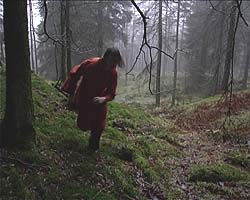 for she still retained her courage and boldness as well as the memories of being a warrior Princess.
At last, after the twenty years passed, Mai was struck down by a mortal illness. As she lay dying and then dead, word of her illness came to her brother the King. With their brothers and their sister, he rushed to her side to revive her. When she opened her eyes and saw her royal family around her, her joy knew no bounds. The King took her in his arms and said,'You once restored me to my throne. It is now my turn to restore you.'
(To be continued)
And that is where this blog comes in...
(Next?) The love of her family was so great that little by little, over time,she regained her sanity and became a Princess again. And all the people of the kingdom rejoiced.
I always try to find pictures after I have written and published a post. Alain took a look at that picture and nearly fainted. He didn't really look quite that bad - I add this to save his dignity, after all, he is the king - but almost.
This is my question: Did I, as a Khalsa, do wrong, as I am believe, by cutting my hair? I know I broke a sacred vow with both eyes wide open. I was not insane; I was totally responsible for my actions. I do not accept, as one person has suggested to me, that I acted under duress; I cannot imagine a daughter of Guru Gobind Singh claiming duress. I also believe now, as I believed then, that if I had not totally shocked them, our family would have fallen apart. Of course, it's far too late to change anything now, but I have been bothered by this for a long time.Mai Personal note to Anonymous, who left a comment on 20 February: We have tried to reply in the comment section numerous times, but for some reason, it refuses to puiblish. So here is what we want to say.We decided to stop this blog because we felt that our stories had been told.However, if we are actually helping anyone, we will post here, we will continue this blog and we will share. We can only share our experiences, thoughts and feelings. Only Waheguru knows if our writings will inspire. That part is in her/his hands, not ours.This blog is the result of our love for Sikhi and of our sisters and brothers of the Panth. We are very happy to know that our efforts have been appreciated and we are deeply greatful that you have told us so.Thank you.Vini, Suni and Mai (DKK)
| | 


 I sat down in the kitchen to work on my knitting and enjoy a cup of tea and some homemade bread and jam.